Streamlining KDP Publishing with a Professional Garden Logbook Interior
The self-publishing landscape has evolved significantly over the last decade, shifting from a speculative gold rush to a mature industry that rewards quality, utility, and strategic niche selection. For entrepreneurs, freelancers, and creative professionals operating within the Amazon Kindle Direct Publishing (KDP) ecosystem, success is no longer defined solely by volume but by the functional value provided to specific end-users. Within this context, the Garden Logbook - Kdp Interior represents more than just a digital asset; it serves as a case study in meeting the sophisticated demands of modern low and medium-content publishing. By offering a pre-formatted, editable, and professionally designed foundation, this resource addresses the critical intersection of operational efficiency and consumer satisfaction in the gardening niche.
The Evolution of Functional Publishing in the Gardening Niche
Gardening has transcended its traditional role as a mere hobby to become a significant lifestyle movement driven by sustainability, food security, and mental wellness. As consumers invest more time and resources into their green spaces, their documentation needs have become increasingly complex. The era of the generic notebook is fading; today’s gardener requires structured data tracking for planting schedules, harvest yields, pest management, and soil health. This shift in consumer behavior creates a distinct opportunity for publishers who can provide specialized tools rather than blank pages.
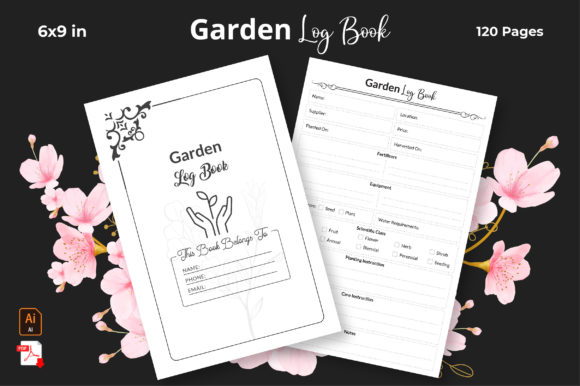
The Garden Logbook - Kdp Interior is engineered specifically to bridge this gap. It acknowledges that the modern gardener is also a data manager of their own micro-ecosystem. By providing 120 pages of purpose-built layouts, this interior moves beyond aesthetic appeal to offer genuine utility. This alignment with user intent is what separates sustainable publishing businesses from fleeting trends. When a product solves a specific problem—such as tracking frost dates or organizing seed inventory—it transitions from a commodity to a valuable tool, thereby increasing customer retention and positive reviews.
Technical Precision as a Competitive Advantage
One of the most persistent friction points in the KDP business model is technical compliance. Amazon’s printing specifications are rigorous, and even minor errors in margin settings, bleed allowances, or file resolution can result in rejected uploads or poor print quality. For professionals managing multiple titles or scaling a publishing portfolio, time spent troubleshooting formatting is time lost on marketing and research. The specification set of this garden logbook directly mitigates these operational risks.
This interior is formatted for a standard 6″ x 9″ trim size with 120 pages, adhering strictly to "No Bleed" requirements. This specific configuration is crucial for several reasons. First, the 6x9 dimension is the industry sweet spot for functional journals, offering enough writing space without becoming unwieldy in a garden shed or potting bench. Second, the no-bleed format simplifies the printing process and reduces the likelihood of content being trimmed incorrectly during manufacturing. Furthermore, the files have been tested and validated for KDP, ensuring that the PDF upload process is seamless. This level of pre-validation allows creators to focus on keyword optimization and cover design rather than pixel-level adjustments.
Customization and Brand Identity in Low-Content Books
A common criticism of the low-content publishing sector is market saturation caused by identical interiors. To build a defensible brand and avoid competing solely on price, differentiation is mandatory. This is where the inclusion of editable Adobe Illustrator files transforms the value proposition of the Garden Logbook - Kdp Interior. Unlike static PDFs that lock users into a single design, editable source files empower creators to modify layouts, adjust fonts, add branding elements, or tailor prompts to specific sub-niches.
For example, a publisher targeting urban balcony gardeners might edit the logbook to emphasize container sizes and vertical spacing, whereas a publisher focusing on homesteaders might expand sections related to preservation and canning. This flexibility supports a broader business strategy of niche diversification using a single core asset. It aligns with the professional expectation that digital assets should be modular and adaptable. By leveraging the editable nature of this interior, marketers and creators can produce unique variations that serve distinct audience segments while maintaining a consistent quality baseline.
Workflow Efficiency for Scaling Publishers
In the digital product economy, speed to market is a vital metric. Developing a high-quality, 120-page interior from scratch requires significant graphic design expertise and hours of layout work. For freelancers and entrepreneurs, this represents a substantial opportunity cost. Utilizing a professionally designed template like this garden logbook accelerates the production cycle without sacrificing quality.
The availability of both JPEG and PDF formats further enhances workflow versatility. While the PDF is optimized for direct KDP upload, JPEG files can be invaluable for creating marketing mockups, social media previews, or A+ Content for Amazon listings. This multi-format approach recognizes that publishing is not just about uploading a file; it is about presenting a product visually to potential buyers. By integrating this asset into their workflow, professionals can reduce development time from weeks to days, allowing for faster iteration and testing of new niches.
Meeting the Demand for Tangible Organization Tools
Despite the proliferation of gardening apps and digital trackers, there remains a robust preference for analog recording methods among gardening enthusiasts. This preference is rooted in the tactile nature of gardening itself; many users prefer not to bring smartphones or tablets into dirty, wet environments. A physical logbook offers durability and accessibility that digital alternatives often lack. Moreover, the act of handwriting observations has been shown to improve memory retention and mindfulness, adding a cognitive benefit to the practical utility.
The Garden Logbook - Kdp Interior capitalizes on this enduring consumer preference by providing a structure that feels organic to the gardening experience. The layout is designed to accommodate the messy reality of outdoor work, with clear sections that allow for quick entries between tasks. Understanding this user context is essential for creators. It highlights that successful KDP products are not merely digital files; they are physical solutions to real-world behaviors. By respecting the analog preference of the target demographic, publishers can create products that resonate on a deeper level than generic digital-to-print conversions.
Strategic Integration into a Broader Business Model
For those building a personal printing business or a KDP portfolio, this logbook serves as a foundational element of a larger content strategy. It can function as a lead magnet, a standalone revenue stream, or a complementary product to higher-ticket items such as gardening courses or coaching services. The key to maximizing its value lies in viewing it through a strategic lens rather than a transactional one.
Professionals should consider how this interior fits into seasonal trends. Gardening is highly cyclical, with peak interest occurring in spring and early autumn. Having a ready-to-use, customizable interior allows publishers to capitalize on these windows of high demand without the lag time associated with custom design. Additionally, the ability to customize the interior means it can be updated annually with new dates or trending planting techniques, extending the product's lifecycle and relevance. This forward-looking approach ensures that the asset continues to generate value long after the initial purchase.
Quality Assurance and Community Feedback
In an marketplace crowded with automated content, human oversight and community engagement are significant differentiators. The emphasis on testing and validation for this interior reflects a commitment to quality assurance that builds trust with both the platform and the end consumer. When creators use reliable assets, they contribute to a healthier ecosystem by reducing the volume of low-quality submissions that frustrate customers and trigger algorithmic penalties.
Furthermore, the invitation for feedback and the encouragement to follow for daily designs suggest a collaborative relationship between the asset creator and the publisher. This dynamic is increasingly important in the creator economy. Staying connected with design trends and receiving updates ensures that your publishing business remains agile. Engaging with the provider and leaving valuable feedback not only supports the development of better future assets but also helps refine your own criteria for what constitutes a high-value KDP interior. Ultimately, the Garden Logbook - Kdp Interior is a tool for professionals who understand that in the modern publishing landscape, excellence is found in the details, the customization options, and the strategic application of well-crafted resources.