Weekly Time Sheet Log Book KDP Interior Guide
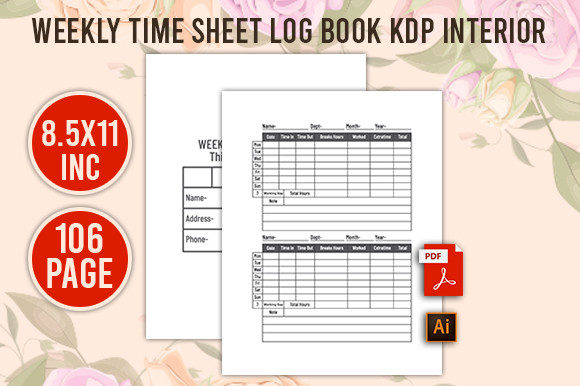
Creating a successful low-content book on Amazon requires more than just uploading a generic PDF. It demands a functional, well-structured interior that solves a specific problem for the end user. The Weekly Time Sheet Log Book KDP Interior is designed specifically for publishers and creators who want to offer a practical tracking tool without spending hours formatting margins or worrying about bleed settings. This 106-page template provides a ready-to-publish foundation for professionals, freelancers, and business owners who need reliable time management documentation.
For KDP publishers, the value lies in the technical precision and immediate usability of the file. Rather than building a logbook from scratch, you gain access to a tested layout that adheres to Amazon’s strict printing guidelines. The 8.5 x 11-inch size is the industry standard for office and administrative logs, offering ample writing space while remaining portable enough for field work. By utilizing this pre-formatted interior, you can focus your energy on cover design, keyword research, and marketing rather than troubleshooting formatting errors during the upload process.
Technical Specifications and File Assets
Understanding exactly what is inside the compressed zip file is crucial for evaluating whether this asset fits your publishing strategy. This package is engineered for versatility and quality assurance. The core component is a 106-page PDF file that has been explicitly tested for KDP compliance. This means the margins, gutter, and safe zones have already been verified to prevent text cutoff or rejection during the automated review process. The "No Bleed" configuration ensures that all content stays safely within the printable area, which is essential for logbooks where lined grids must remain crisp and aligned.
Beyond the print-ready PDF, the inclusion of an Adobe Illustrator Vector AI file adds significant long-term value. While the PDF allows for immediate publishing, the vector source file grants you the freedom to customize. You can adjust column widths, change fonts to match a specific brand aesthetic, or modify header text to target niche audiences like nurses, contractors, or tutors. This dual-file approach bridges the gap between a quick launch product and a customizable asset for experienced designers. Additionally, the dedicated "Belongs To" page at the front adds a professional touch that increases perceived value and helps users keep track of their physical copy in shared workspaces.
Practical Applications Across Industries
A weekly time sheet log serves distinct purposes depending on who is using it. When selecting or marketing this Weekly Time Sheet Log Book KDP Interior, consider the diverse range of potential end-users. Each demographic has unique pain points that a standardized logbook can alleviate.
- Freelancers and Gig Workers: Independent contractors often struggle with invoicing accuracy. A physical log provides a tangible record of billable hours that can be referenced when creating digital invoices. It serves as a backup system when apps fail or battery life runs out on job sites.
- Small Business Owners: For teams without expensive HR software, a printed logbook offers a low-cost payroll verification method. Employees can record start times, end times, and break durations manually, reducing disputes over worked hours.
- Caregivers and Home Health Aides: In healthcare and domestic work, precise timing is often legally required for insurance reimbursement. A structured weekly log ensures compliance and provides families with peace of mind regarding care schedules.
- Students and Educators: Academic researchers and graduate students tracking study hours or lab time benefit from visualizing their weekly commitment. This analog tracking method reduces screen fatigue and encourages mindful time allocation.
- Tradespeople and Contractors: Construction and repair professionals often work in environments where digital devices are impractical or unsafe. A rugged, simple paper log withstands dust and moisture better than a smartphone app.
Why Analog Tracking Remains Relevant
In an era dominated by productivity apps and automated time-tracking software, the persistence of paper logbooks might seem counterintuitive. However, the demand for physical records remains robust for several practical reasons. Digital tools introduce friction through login requirements, subscription costs, and technical glitches. A paper logbook is always accessible, requires no charging, and offers zero learning curve. For many users, the act of physically writing down times creates a stronger cognitive connection to their work habits than tapping a screen.
Furthermore, legal and audit considerations often favor physical documentation. Signed and dated paper records carry weight in dispute resolution that digital entries sometimes lack. When you publish a Weekly Time Sheet Log Book KDP Interior, you are not selling nostalgia; you are providing a compliant, reliable tool for accountability. The simplicity of the layout reduces cognitive load, allowing users to focus on their actual work rather than managing complex software interfaces. This reliability is a key selling point that should be highlighted in your book description and marketing materials.
Evaluating Quality and Usability Standards
Not all KDP interiors are created equal. When assessing this resource or similar assets, prioritize functionality over decorative elements. A time sheet log must be legible and spacious. The 8.5 x 11 dimension chosen for this template is optimal because it accommodates seven days of detailed entries without cramping handwriting. Smaller trim sizes often fail in this category because users cannot fit necessary notes or timestamps into narrow columns.
The "No Bleed" specification is another critical quality indicator. Many amateur templates attempt full-bleed designs that get trimmed incorrectly during printing, resulting in uneven borders or lost data. By sticking to a safe, no-bleed format, this interior guarantees a consistent user experience across every printed copy. Publishers should also verify that the paper weight and opacity standards of KDP are compatible with the design. High-contrast lines and clear typography ensure that the log remains readable even on standard 55# cream or white paper. Testing the interior yourself by ordering a proof copy is always recommended before launching to verify that the writing experience meets customer expectations.
Strategic Implementation for Publishers
Acquiring the Weekly Time Sheet Log Book KDP Interior is only the first step. Successful implementation involves strategic positioning. Since this is a functional tool, your metadata and cover design must communicate utility clearly. Avoid abstract art; instead, use clean, professional typography and imagery that suggests organization and reliability. Highlight specific features like "106 Pages," "Weekly Format," and "Large 8.5x11 Size" directly on the cover or subtitle to improve conversion rates.
Consider creating variations using the included AI file to build a series. A general time sheet log can be adapted into specialized versions for specific professions, such as "Nurse Shift Log" or "Contractor Job Tracker." This differentiation helps capture long-tail keywords and reduces direct competition. Always respect licensing terms and ensure your modifications add genuine value rather than simply repackaging the same content. By treating this interior as a foundational asset rather than a final product, you can build a sustainable portfolio of high-utility low-content books that serve real market needs.