Habit Tracker: Launch Your KDP Business with Ready Interiors
Building a consistent routine is one of the most effective ways to achieve personal and professional goals, but maintaining that momentum requires more than just willpower. A habit tracker serves as a visual accountability partner, transforming abstract intentions into tangible daily actions. For entrepreneurs and creators in the low-content publishing space, this tool represents a dual opportunity: it is both a practical instrument for self-improvement and a high-demand product niche for Amazon KDP. Understanding the mechanics of these journals and the technical specifications required for publication is essential for anyone looking to enter this market or improve their own productivity systems.
The Practical Value of Tracking Daily Routines
At its core, a habit tracker is a simple grid or checklist system designed to record adherence to specific behaviors over time. While the concept seems basic, the psychological impact is significant. When users mark off a completed task, they receive an immediate dopamine reward, reinforcing the behavior loop. This visual evidence of progress helps bridge the gap between setting a goal and achieving it. For adults balancing careers, education, and personal wellness, these journals provide clarity amidst chaos. They move tracking away from fleeting digital notifications and into a dedicated physical space, which often leads to higher retention rates and deeper mindfulness regarding daily choices.
The appeal of this format lies in its versatility. Unlike rigid planners that dictate every hour of the day, a habit journal focuses solely on repetition and consistency. This makes it an ideal companion for various lifestyles. A freelancer might track deep work blocks and client outreach, while a parent might focus on hydration, reading time, and exercise. The flexibility allows users to customize their experience entirely, making the product relevant across diverse demographics from students to retirees.
Why 6x9 Inches is the Industry Standard
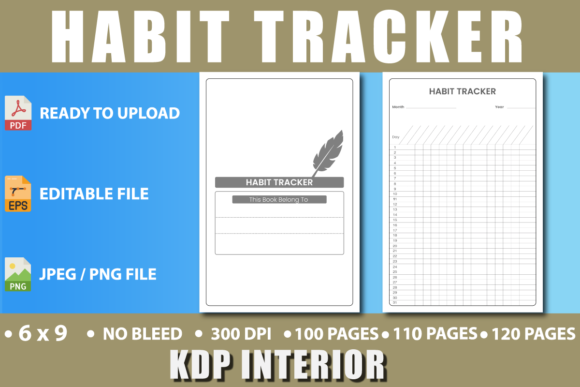
When selecting or creating interiors for KDP, size matters significantly for user adoption. The 6" x 9" dimension has emerged as the gold standard for habit journals for several practical reasons. First, it offers the perfect balance between writing space and portability. It is large enough to accommodate monthly grids and daily notes without feeling cramped, yet compact enough to fit in a backpack, purse, or desk drawer. This portability ensures the journal remains accessible throughout the day, which is critical for building consistency.
From a publishing perspective, this trim size is cost-effective and widely accepted by retailers. It fits standard shelving and shipping parameters, reducing logistical friction. For creators using pre-made interiors, ensuring the files are set to exactly 6" x 9" with no bleed is crucial. "No bleed" means the content stays within safe margins, preventing important tracking grids from being trimmed during the printing process. This specification simplifies the upload process and reduces the risk of rejection or formatting errors on the KDP platform.
Streamlining Your Publishing Workflow with Editable Files
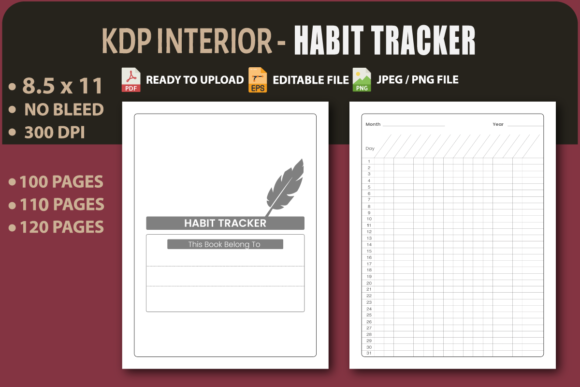
For those entering the KDP business, time-to-market is often the difference between success and stagnation. Creating high-quality interiors from scratch requires design skills and significant hours. Utilizing ready-to-upload habit tracker interiors solves this bottleneck. These resources typically come with tested PDF files that have already been validated for KDP compliance, eliminating the guesswork regarding margins, resolution, and page count. Having access to 100, 110, or 120-page variations allows publishers to offer different price points and value propositions without additional design labor.
Beyond simple convenience, having editable AI (Adobe Illustrator) and JPEG source files provides a strategic advantage. While a print-ready PDF gets you published quickly, the editable files allow for long-term brand building. You can modify fonts, adjust grid layouts, add motivational quotes, or rebrand the cover page to create a unique product line. This customization capability is vital in a competitive marketplace where differentiation drives sales. Instead of selling the exact same interior as hundreds of others, you can tailor the design to specific sub-niches, such as fitness tracking, financial discipline, or creative routines.
Diverse Applications for Personal and Commercial Use
The utility of these trackers extends far beyond individual self-help. Educators and coaches frequently use them as supplementary materials for clients or students. A wellness coach might bundle a customized 6x9 tracker with their coaching program to help clients maintain accountability between sessions. Similarly, corporate teams sometimes utilize simplified versions for group challenges or wellness initiatives. Because the files are editable, professionals can adapt the generic templates to include specific organizational goals or branding elements.
For digital creators and bloggers, these interiors serve as excellent lead magnets or bonus content. Offering a downloadable PDF version can help build an email list, while the physical KDP version generates passive income. The cross-platform potential is significant; the same design used for a printed book can be adapted into digital planner stickers or printable downloads for Etsy. This multi-channel approach maximizes the return on investment for a single design asset.
Critical Considerations Before You Publish or Print
While ready-made interiors accelerate the process, quality assurance remains your responsibility. Before uploading any file to KDP, always download and review the proof. Even if a file is advertised as "tested," software updates or printer calibration changes can occasionally affect output. Check that the grayscale values are rich enough for clear printing and that the binding gutter margin provides adequate space for writing near the spine. A habit tracker that is difficult to write in due to poor margin planning will result in negative reviews regardless of how good the design looks on screen.
Consider the paper type and ink limitations as well. Standard KDP white paper is ideal for these journals, but it is relatively thin. Ensure your design does not use heavy black saturation or large solid blocks of ink, as this can cause bleed-through that ruins the usability of the reverse side. Clean, minimalist line art typically performs best functionally and aesthetically. Additionally, verify that the page count aligns with your pricing strategy. A 120-page journal offers more perceived value than a 100-page version, but it also increases printing costs. Calculate your royalties carefully to ensure profitability at your target price point.
Finally, think about the end-user experience when customizing your editable files. Leave adequate white space for notes or reflections. Many users find that tracking alone isn't enough; they need room to journal about why they missed a habit or what triggered a success. Adding small prompt sections or weekly review areas can elevate a basic tracker into a comprehensive growth tool. By focusing on genuine utility rather than just filling pages, you create a product that customers actually want to buy and use repeatedly. Whether you are launching a publishing business or simply organizing your own life, prioritizing function and quality ensures the habit tracker serves its true purpose.