Migraine Journal KDP Interior: Design & Layout Guide
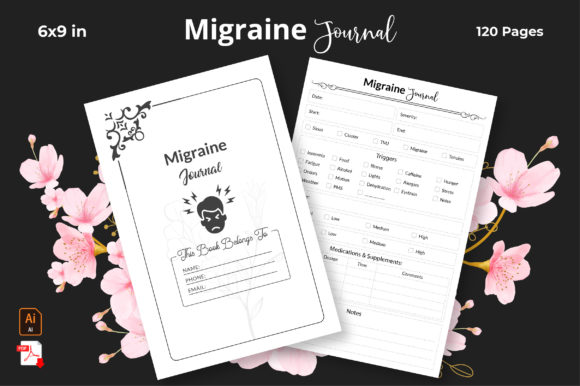
Creating a successful low-content book on Amazon requires more than just uploading a generic PDF; it demands a thoughtful user experience that solves a specific problem. The Migraine Journal KDP interior is designed specifically for this purpose, offering a structured yet compassionate layout for individuals tracking chronic pain. Unlike standard notebooks, this 120-page template balances clinical utility with visual calmness, recognizing that users suffering from migraines are often sensitive to harsh contrasts and cluttered typography. The design prioritizes readability and ease of use during episodes of photophobia or cognitive fog, making it a practical tool rather than just another notebook.
This interior template serves as a foundational design asset for publishers targeting the health and wellness niche. Its visual personality is restrained and functional, avoiding decorative flourishes that might distract or overwhelm. Instead, it utilizes clean lines, ample white space, and intuitive prompts that guide the user through tracking triggers, symptoms, medication efficacy, and environmental factors. For KDP entrepreneurs, this pre-formatted interior eliminates the guesswork of medical journal design, ensuring the final product meets both aesthetic standards and practical health-tracking needs.
Visual Hierarchy and Accessibility in Health Tracking
The effectiveness of a migraine tracker relies entirely on its typography and layout structure. When evaluating this Migraine Journal KDP interior, notice how the visual hierarchy directs attention without demanding excessive cognitive load. The typeface selection leans toward modern sans serif fonts known for high legibility at smaller sizes. This is crucial because migraine sufferers often need to log data quickly during the onset of an attack when vision may be blurred or impaired. A premium font choice here isn't about stylistic flair; it is an accessibility feature.
Readability extends beyond font family to include spacing, weight, and contrast. The interior maintains generous leading (line spacing) and tracking to prevent text from appearing dense. High-contrast black text on white paper is standard for KDP printing, but the layout mitigates potential glare by avoiding large blocks of solid ink. Input fields are clearly delineated with light gray rules rather than heavy black boxes, reducing visual noise. This careful attention to editorial design principles ensures the journal remains usable across different lighting conditions and physical states, directly influencing user retention and positive reviews.
For publishers, understanding this balance is key to brand perception. A journal that looks clinical but feels gentle builds trust. It signals that the creator understands the audience's lived experience. When you customize the editable Adobe Illustrator files, maintain this accessible hierarchy. If you adjust the font pairing, test it against WCAG accessibility guidelines for print. Ensure that any script font or handwritten font used for section headers remains distinct from the body text to preserve clear navigation. Consistency in these typographic choices reinforces professionalism and makes the journal a reliable companion for health management.
Technical Specifications for Seamless KDP Publishing
Navigating Amazon’s printing requirements can be daunting, but this template is engineered to remove technical friction. The Migraine Journal KDP interior comes formatted at 6″ x 9″ inches, the industry standard for portable health journals. This trim size offers enough surface area for detailed tracking while remaining compact enough to fit in a purse or backpack. The 120-page count provides approximately four months of daily tracking or longer-term episodic logging, striking a balance between value and portability.
Critically, this interior is configured with no bleed. This specification simplifies the upload process and reduces the risk of rejection due to margin errors. All content sits safely within the printable area, ensuring that binding gutters do not obscure writing spaces. The included files cover every stage of production:
- Print-Ready PDF: Fully formatted and tested for immediate KDP upload.
- JPEG Previews: Useful for creating mockups, A+ Content, and social media graphics.
- Editable Adobe Illustrator Files: Allows for deep customization of layouts, logos, and branding elements.
Having access to the source AI files transforms this from a static product into a flexible design asset. You can modify prompt wording to target specific sub-niches, such as vestibular migraines or menstrual migraine tracking, without rebuilding the grid system from scratch. This adaptability is essential for scaling a low-content business. Always verify your modifications against KDP’s current margin and bleed guidelines before publishing, even when starting with a pre-tested template.
Strategic Customization and Brand Identity
While the base template is ready for printing, differentiation drives sales in a saturated market. Use the editable files to infuse your unique brand identity into the Migraine Journal KDP interior. This doesn't mean overhauling the functional layout; rather, it involves subtle integrations of your logo design, color accents (for digital previews), and proprietary tracking methods. Perhaps you want to add a monthly reflection page or integrate a specific pain scale methodology. The Illustrator files make these additions seamless while preserving the underlying structural integrity.
Consider how typography supports your brand positioning. If your publishing imprint focuses on holistic wellness, you might pair the existing sans serif body text with a soft, organic display font for chapter openers. Conversely, a medically-oriented brand might stick to strict geometric typefaces to convey precision. Test these font pairings rigorously. Print sample pages at home to evaluate ink spread and readability at actual size. What looks crisp on a backlit monitor may appear muddy or too faint on standard KDP cream or white paper.
Beyond aesthetics, think about commercial licensing and long-term asset management. This interior is designed for commercial use, allowing you to publish unlimited variations. However, true value comes from treating it as part of a larger ecosystem. Create matching social media graphics using the JPEG assets to promote the journal. Develop A+ Content that showcases the interior spreads, highlighting the thoughtful layout and ease of use. When customers see that the design serves their specific health needs, conversion rates improve. Remember to gather feedback from early users; their insights on font size, field placement, and overall usability are invaluable for iterating future editions.
Evaluating Fit for Your Publishing Portfolio
Not every template suits every publisher. Before integrating this Migraine Journal KDP interior into your catalog, assess its alignment with your existing portfolio and audience expectations. If you specialize in vibrant, illustrated children’s books, this minimalist health tracker might feel disjointed. However, for creators focused on self-care, medical advocacy, or productivity tools, it fills a critical gap. The neutral, professional styling allows it to coexist alongside other non-fiction titles without clashing.
Review the included styles critically. Does the tracking granularity match current medical advice? Are the prompts inclusive of diverse migraine experiences? Sometimes, the best customization is adding context—perhaps an introductory page explaining how to use the journal effectively or a resource list for support organizations. These additions elevate the product from a simple notebook to a comprehensive health tool. By approaching this interior as a collaborative design partner rather than a finished commodity, you create genuine value for end-users and build a sustainable, reputable KDP business.