Enhancing KDP Coloring Books with This Book Belongs to Coloring Page-9
The first page of any coloring book serves a function far greater than simple identification. It acts as the threshold between the physical object and the creative experience, setting the tone for hours of artistic engagement. For self-publishers and graphic designers utilizing Amazon KDP, the ownership page is often an afterthought, yet it represents a critical opportunity for brand consistency and user experience. This Book Belongs to Coloring Page-9 addresses this specific need by providing a professionally designed, non-copyright template that integrates seamlessly into low-content publishing workflows. Created by Salman, a creative print designer specializing in graphics, this asset bridges the gap between functional utility and aesthetic appeal, ensuring that the interior quality matches the cover design.
Technical Specifications for Print Production
Successful KDP publishing relies heavily on adherence to technical standards. A common failure point for new publishers is uploading files that do not meet print resolution requirements or trim size specifications. This design asset eliminates technical ambiguity by providing files optimized specifically for commercial printing standards.
Resolution and File Integrity
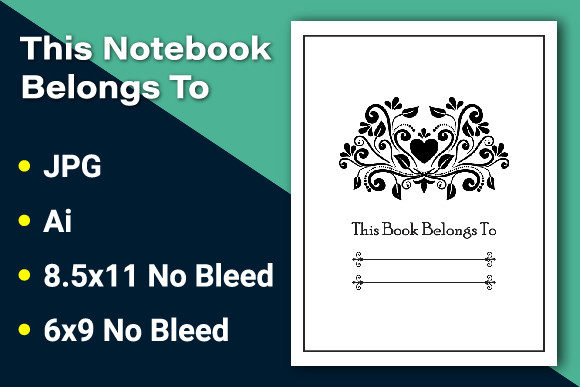
The primary concern for any printed coloring book is line crispness. Blurry or pixelated lines destroy the user experience and lead to negative reviews. This product is supplied at 300 DPI (Dots Per Inch), which is the industry standard for high-quality offset and digital printing. At this resolution, vector-based lines remain sharp regardless of the ink saturation or paper type used by Amazon’s printing facilities. The inclusion of both AI (Adobe Illustrator) and JPG formats offers flexibility for different workflow stages. The AI file allows for infinite scalability and editable text elements, while the high-resolution JPG serves as a plug-and-play solution for users working in Canva, Affinity Publisher, or other layout software that may not support native vector editing.
Trim Size Versatility
Coloring books generally fall into two dominant size categories on Amazon: 8.5×11 inches and 6×9 inches. This Book Belongs to Coloring Page-9 is pre-configured for both dimensions. This dual-format availability prevents the distortion issues that occur when resizing a single master file. Stretching an 8.5×11 design to fit a 6×9 canvas often results in awkward whitespace or cropped artwork. By providing dedicated layouts for each size, the design maintains its intended proportions, margins, and safe zones, ensuring that no critical elements are lost during the binding process.
The Strategic Value of Professional Ownership Pages
While "This Book Belongs To" pages are functionally simple, their impact on perceived value is significant. In a saturated market, differentiation often comes down to the polish of interior details. Using a generic, hand-drawn stick figure or a basic word processor font signals amateurism to the consumer before they even reach the first coloring plate.
Establishing Brand Cohesion
A professional ownership page acts as an extension of the book’s theme. Whether the coloring book focuses on mindfulness, animals, architecture, or fantasy, the typography and decorative elements of the title page should reflect that aesthetic. This design provides a neutral yet elegant foundation that complements a wide variety of niches without overpowering the content. It signals to the buyer that the creator has invested time in the entire product ecosystem, not just the central illustrations. This attention to detail fosters trust and increases the likelihood of repeat purchases from customers who associate the brand with quality.
User Engagement and Personalization
From a psychological perspective, the act of writing one's name in a book creates a sense of ownership and commitment. For educators and parents, this page serves a practical purpose in identifying property in shared environments like classrooms or libraries. However, beyond utility, it invites the user to participate in the book immediately. A well-designed prompt encourages interaction, transforming the book from a passive commodity into a personalized artifact. This initial engagement can set a positive emotional tone that carries through the rest of the coloring experience.
Licensing and Commercial Safety
One of the most significant risks in KDP publishing is copyright infringement. Many free resources found online carry hidden licensing restrictions that prohibit commercial use or require attribution that cannot be accommodated within a printed book. Using such assets can result in account suspension or legal challenges.
This Book Belongs to Coloring Page-9 is explicitly designated as a non-copyright coloring page for commercial use. The creator, Salman, has cleared this design for unrestricted application in KDP projects. This "fully creative design" status means publishers can integrate it into unlimited titles without fear of royalty obligations or takedown notices. For business owners and agencies managing multiple pen names or imprints, this clarity is essential. It streamlines the production pipeline by removing the need for individual license tracking or legal review for this specific asset. The freedom to use this product extends to modification as well; because the source AI file is included, publishers can alter colors, fonts, or layout elements to create unique variations across a series while maintaining the underlying safety of the original license.
Integration Workflows for Publishers
Incorporating this asset into a manuscript requires understanding placement and pagination best practices. While the design is ready to use, strategic implementation maximizes its effectiveness.
- Right-Hand Placement: Traditionally, ownership pages appear on the right-hand side (recto) following the half-title or main title page. This ensures the user sees the personalization prompt immediately upon opening the cover, rather than having to flip past blank flyleaves.
- Bleed vs. No Bleed: Publishers must decide whether to utilize bleed settings based on the specific file version selected. If the design elements extend to the edge of the paper, the PDF export must include bleed marks and extra margin. If the design is contained within safe margins, standard no-bleed settings apply. The provided 8.5×11 and 6×9 files accommodate these distinct production needs.
- Paper Stock Considerations: Amazon KDP offers white and cream paper options. White paper is generally preferred for coloring books as it provides higher contrast for black line art. When placing this ownership page, ensure the background color (if any) is adjusted for the chosen paper stock to prevent muddiness or unintended tinting.
- Series Consistency: For creators building a catalog, using this specific design as a template establishes a recognizable interior signature. Even if the cover art changes drastically between volumes, the consistent ownership page creates a subconscious link for collectors, reinforcing the series identity.
Design Characteristics and Aesthetic Flexibility
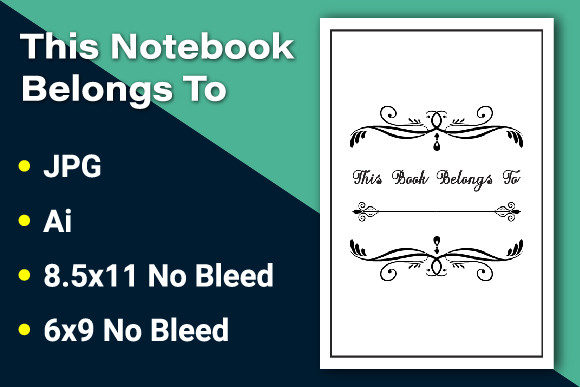
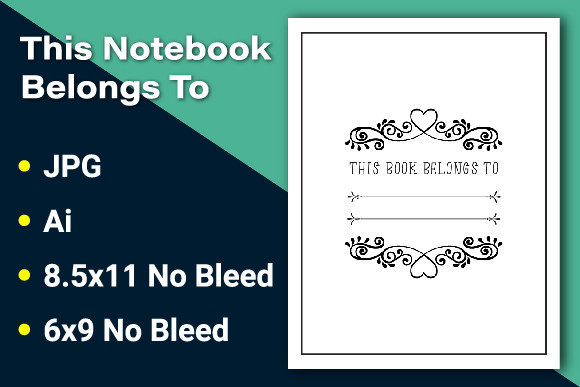
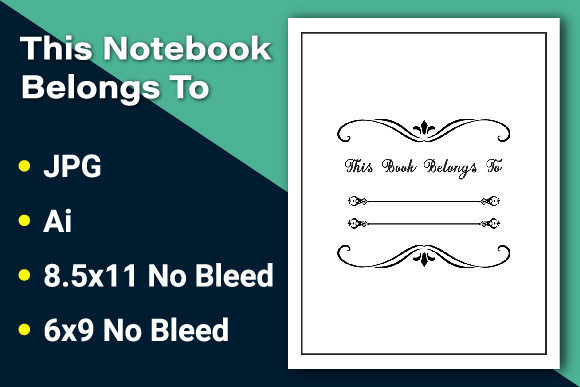
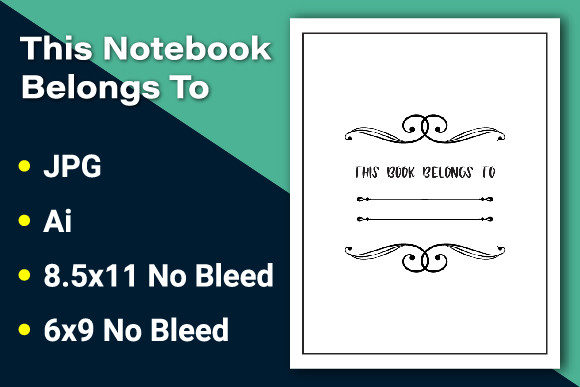
The visual language of This Book Belongs to Coloring Page-9 balances ornamentation with functionality. Unlike overly complex designs where the text area is obscured by heavy illustration, this template prioritizes legibility. The writing space is ample enough for various handwriting styles, including larger script used by children or those with motor control limitations. This inclusivity broadens the potential audience for the coloring book.
The graphic elements serve as framing devices rather than distractions. They guide the eye toward the center field where the name is intended to go. This hierarchy is crucial in user interface design, even in analog formats. Furthermore, the style is sufficiently versatile to bridge demographics. It avoids being overly juvenile, making it appropriate for adult coloring books, yet remains accessible enough for younger audiences. This cross-demographic appeal makes it a valuable asset for publishers who operate in multiple niches or who wish to create family-friendly titles that do not alienate adult enthusiasts.
Optimizing the User Experience Through Details
Experienced KDP publishers understand that reviews are often driven by small details. A customer might love the illustrations but leave a three-star review because the paper was too thin or the margins were cut off. The ownership page is part of this holistic quality assessment. By utilizing a high-quality 300 DPI file, publishers ensure that this first impression is flawless.
Additionally, the editable nature of the AI file allows for customization that goes beyond simple name entry. Publishers can add fields for "Date Started," "Date Completed," or "Favorite Color Used," turning the ownership page into a journaling tool. This added layer of interactivity increases the book's utility and perceived value. For educational markets, teachers can add class names or student numbers directly to the master file before printing, streamlining classroom management. The ability to modify the vector artwork means that the design can evolve alongside the publisher’s brand, adapting to seasonal themes or special editions without requiring a complete redesign from scratch.
Final Considerations for Implementation
When downloading and implementing This Book Belongs to Coloring Page-9, users should verify their software compatibility. Adobe Illustrator is required to edit the .ai file, though the JPG serves as a universal alternative. Always check the final PDF proof before approving publication to ensure that the safe zones align with KDP’s current manufacturing specifications, as these can occasionally update. The combination of technical precision, commercial safety, and aesthetic versatility makes this design asset a fundamental component for serious KDP creators. It transforms a mandatory administrative page into a value-add feature that enhances the overall professionalism of the published work. By leveraging high-quality, pre-cleared assets, publishers can focus their creative energy on developing unique content while maintaining a consistent standard of production excellence across their entire catalog.