The Essential Role of "This Book Belongs To" Pages in KDP Coloring Books
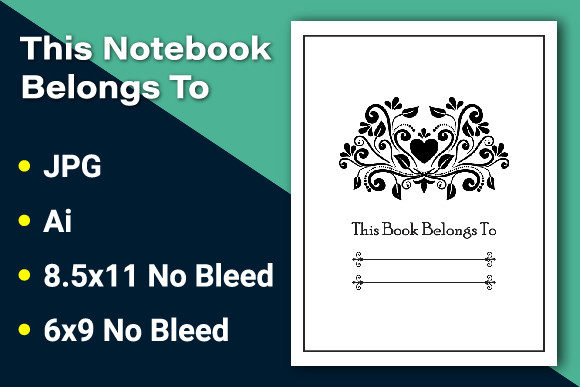
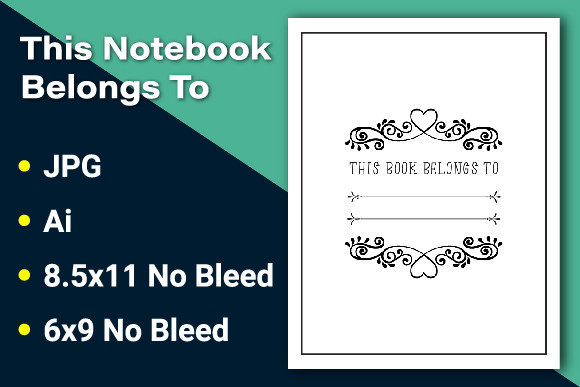
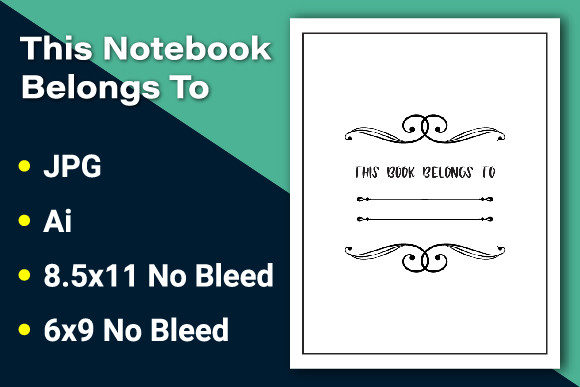
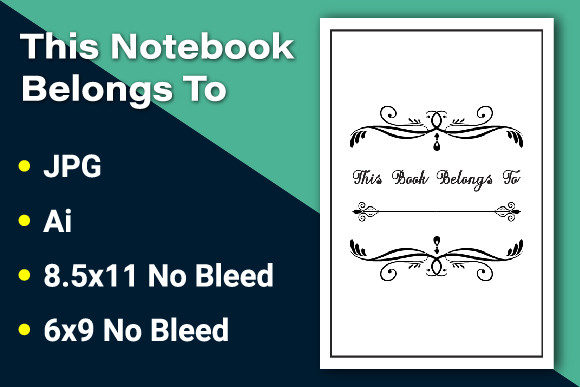
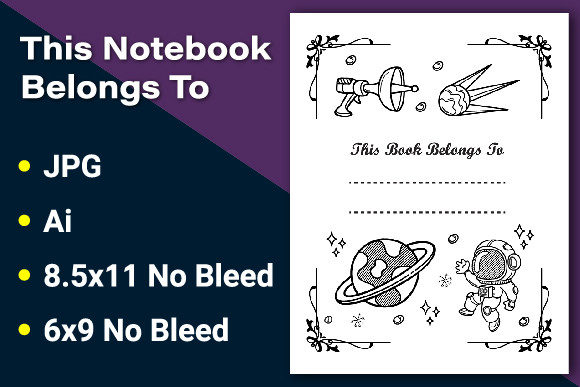
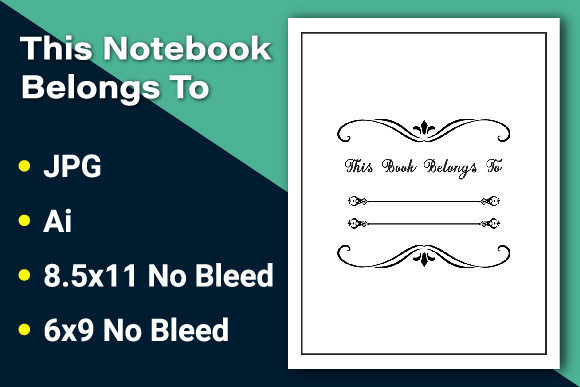
When creating a coloring book for Amazon KDP or other print-on-demand platforms, the focus often lands entirely on the intricate illustrations and cover design. However, experienced publishers understand that the interior user experience begins before the first artwork is colored. The "This Book Belongs To" page is not merely a placeholder; it is a critical component of book structure, intellectual property protection, and reader engagement. Designed by creative print designer Salman, the specific non-copyright coloring page discussed here serves as a perfect example of how functional design elements can enhance the overall value of a creative product.
Understanding the Purpose of Ownership Pages
At its most basic level, an ownership page identifies the user. In the context of adult and children’s coloring books, this serves a psychological function known as the endowment effect. When a person writes their name in a book, they establish a tangible connection to the object. This simple act transforms a mass-produced commodity into a personal artifact. For creators using ready-to-use assets like Salman’s design, providing this space signals to the buyer that the book was designed with their personal experience in mind.
Beyond psychology, these pages serve practical organizational purposes. Coloring books are frequently used in communal settings such as classrooms, art therapy groups, libraries, and waiting rooms. A clearly designated ownership page reduces loss and confusion in shared environments. For educators and therapists, this page can also serve as an administrative tool, helping to track which materials belong to which students or clients without requiring external labeling systems.
Intellectual Property and Copyright Clarity
One of the most significant aspects of high-quality KDP assets is clear licensing. The design highlighted here is explicitly marked as a non-copyright coloring page. This distinction is vital for self-publishers navigating the complex landscape of digital assets. Many new publishers mistakenly assume that any free or purchased graphic can be used commercially. By utilizing a design where the creator has explicitly stated, "Feel free to use this product because this is a fully creative design," you mitigate legal risk.
This transparency aligns with E-E-A-T (Experience, Expertise, Authoritativeness, and Trustworthiness) principles. When you publish a book containing properly licensed front matter, you demonstrate professional integrity. It protects your publishing account from copyright strikes and ensures that your customers receive a legitimate product. Always verify that your "This Book Belongs To" page, like the one designed by Salman, comes with commercial usage rights specifically tailored for KDP.
Technical Specifications for Professional Printing
A beautiful design fails if it does not meet printing standards. Understanding technical specifications is what separates amateur publications from professional products. The asset described offers two primary size options: 8.5×11 inches and 6×9 inches. These are industry-standard trim sizes for coloring books, but choosing between them requires understanding your target audience.
- 8.5×11 Inch Format: This is the standard letter size, ideal for detailed mandalas, complex landscapes, and educational activity books. It provides maximum canvas space and is generally preferred for adult coloring books where fine motor precision is required.
- 6×9 Inch Format: This portable size is excellent for travel coloring books, journals, and younger audiences. It feels more like a novel or diary, making it less intimidating for beginners and easier to carry in bags.
The Importance of 300 DPI Resolution
Resolution is non-negotiable in print design. The product details specify a High Quality 300 DPI file format. DPI stands for Dots Per Inch, and 300 is the minimum threshold for crisp, professional offset and digital printing. Screens display images at 72 or 96 PPI (Pixels Per Inch), which is why an image might look sharp on your monitor but appear pixelated or blurry when printed at full size.
Using a 300 DPI source file ensures that the lines on the ownership page remain sharp and the text remains legible. Blurry front matter creates a negative first impression, suggesting that the rest of the coloring pages may also be low quality. Whether you are exporting from Adobe Illustrator or working with JPGs, always verify the effective resolution at the final print size before uploading to KDP.
File Formats and Workflow Integration
The availability of both AI (Adobe Illustrator) and JPG formats addresses different skill levels and workflow needs. Understanding when to use each format is essential for efficient book assembly.
Working with AI Files
The AI file is a vector-based source file. This is the gold standard for print designers because vectors are mathematically defined rather than pixel-based. This means you can resize the "This Book Belongs To" page infinitely without losing quality. More importantly, the AI format allows for customization. You can change the font to match your book’s typography, adjust line weights to coordinate with your interior art style, or add specific branding elements. If you have access to Adobe Illustrator or compatible software like Affinity Designer, starting with the AI file provides maximum flexibility.
Utilizing JPG Files
For publishers who do not use vector software, the high-resolution JPG serves as a reliable alternative. Since this specific asset is provided at 300 DPI, the JPG is print-ready out of the box. This format is ideal for drag-and-drop workflows in tools like Canva, Book Bolt, or Microsoft Word. However, users must be careful not to stretch or distort the JPG beyond its native dimensions, as this will degrade quality below the 300 DPI threshold.
Design Cohesion and User Experience
A common misunderstanding is that front matter should be generic. In reality, the ownership page sets the aesthetic tone for the entire book. Salman’s design is described as a "fully creative design," implying it possesses artistic merit beyond simple utility. When selecting or customizing this page, consider how it bridges the gap between the cover and the interior content.
If your coloring book features botanical illustrations, an ownership page with floral borders creates visual continuity. If your book is geometric or abstract, a minimalist typographic treatment is more appropriate. This cohesion enhances the perceived value of the book. Readers subconsciously assess quality based on consistency. A jarring transition from an ornate cover to a plain text ownership page can break immersion, whereas a thoughtfully designed transition deepens engagement.
Practical Application in Modern Publishing
In the current KDP ecosystem, competition is high. Success often hinges on the details that improve customer satisfaction and reduce returns. A well-designed ownership page contributes to positive reviews. Customers frequently mention "nice touches" or "professional feel" in feedback, and front matter is a key driver of these sentiments.
Furthermore, this page can be repurposed strategically. Some publishers use the reverse side of the ownership page for color testing swatches, a dedication space, or a "belonging" certificate for children’s books. Because the provided asset is non-copyright and fully editable via the AI file, you have the freedom to innovate without worrying about licensing restrictions. This adaptability makes it a versatile asset for building a cohesive brand across multiple titles.
Best Practices for Implementation
To maximize the effectiveness of this asset, follow these implementation guidelines:
- Verify Margins: Even though the file is 8.5×11 or 6×9, ensure critical elements stay within the safe zone. KDP requires specific gutter margins depending on page count. Place the "This Book Belongs To" text far enough from the spine so it isn't swallowed by the binding.
- Paper Considerations: Remember that KDP standard paper is 55# (90 GSM). Heavy ink coverage on the ownership page can cause bleed-through. Test your design to ensure the back of the ownership page (which is usually blank or contains another light design) doesn't show through when the user colors heavily.
- Credit Where Due: While the asset is non-copyright, maintaining professional ethics involves respecting the creator. If you modify Salman’s design significantly, it is still good practice to acknowledge the original source in your colophon or credits page, fostering a supportive community among designers.
- Consistency Check: Before publishing, print a physical proof. Digital previews cannot accurately represent line thickness or paper absorption. Seeing the ownership page in physical form confirms that the 300 DPI resolution translates correctly to paper.
Conclusion
The "This Book Belongs To" coloring page is far more than a formality; it is a foundational element of professional book design. By utilizing high-quality, non-copyright assets like those created by Salman, publishers can ensure their books meet technical standards while providing a superior user experience. Whether you are working with AI files for custom branding or using ready-made JPGs for quick assembly, understanding the purpose, specifications, and strategic application of this page will elevate your KDP coloring books above the competition. In a market driven by visual appeal and user satisfaction, every page counts—including the very first one.